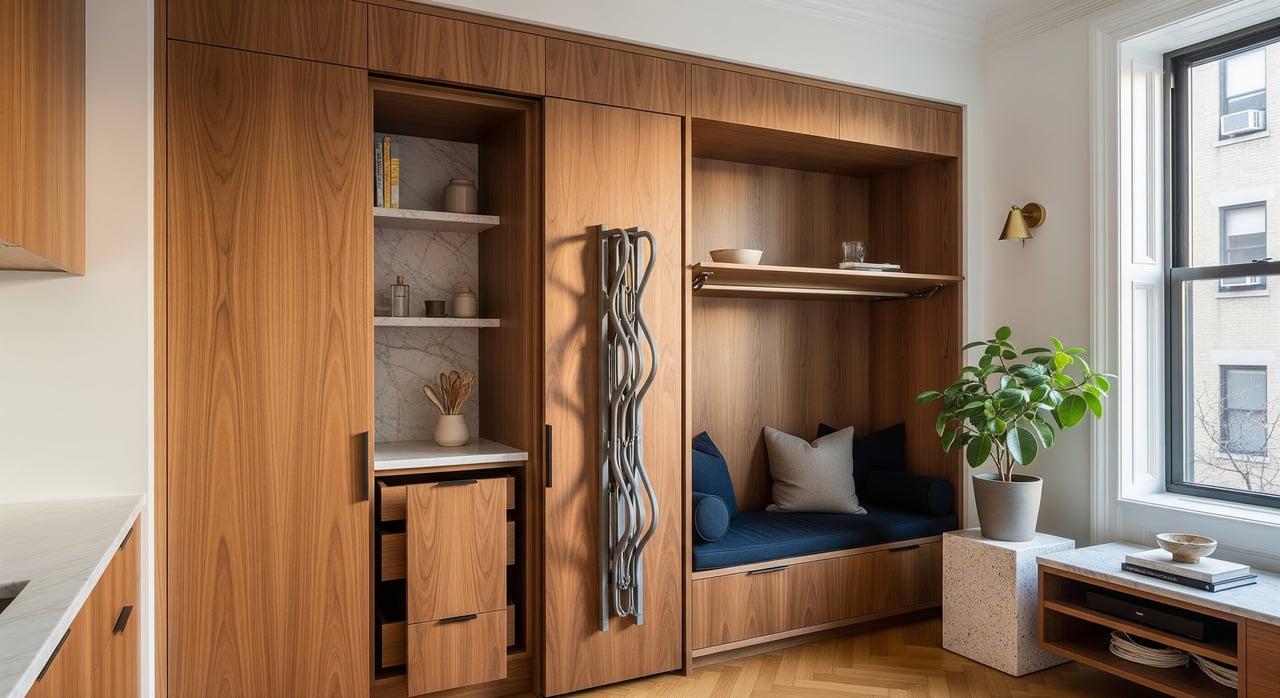
Is your Cobble Hill apartment packed to the brim but short on storage? You’re not alone. Many pre‑war homes here offer charm and character, but they can also mean narrow rooms, small kitchens, and limited closets. In this guide, you’ll learn smart, staging‑friendly ideas that make day‑to‑day living easier and help your home photograph beautifully if you plan to sell or rent. Let’s dive in.
Why Cobble Hill storage is unique
Cobble Hill has a high concentration of pre‑war brownstones, walk‑ups, and boutique co‑ops or condos. You often get higher ceilings and lovely architectural details, but floor plans can be tight with fewer closets. That means vertical surfaces, alcoves, and tight corners matter.
Many interiors have plaster over lath rather than modern drywall. For heavy items, plan for toggle bolts or masonry anchors on brick and consider a pro installer for secure mounting. If you own, remember that co‑ops and condos commonly require board approval for visible, permanent alterations. If your building sits in a historic district, exterior changes typically involve the NYC Landmarks Preservation Commission. For most simple interior storage like freestanding shelving or typical closet systems, permits are not usually required, but confirm with your building and the NYC Department of Buildings when in doubt.
Entry storage: tidy first impression
Your entry sets the tone for the entire home. Keep sightlines clean and surfaces calm so the space looks larger.
- Use a narrow console with drawers or concealed cubbies. An open‑leg design shows more floor and light.
- Try a storage bench with woven baskets underneath, or a custom bench in an entry alcove if you have one.
- Add a floating shelf with a small tray for keys and mount a mirror above to bounce light and add depth.
- Create a clean grid of hooks or a vertical pegboard. Use matching hooks for a cohesive look.
- For tight layouts, consider a slim shoe cabinet or over‑door organizer.
Renter‑friendly options include adhesive hooks, over‑door racks, and freestanding cabinets that avoid drilling. For photos or showings, keep only one coat and 1–2 shoes visible and add one simple decorative item on the console.
Kitchen storage: clear counters and capacity
Small Cobble Hill kitchens can still look spacious when storage does the heavy lifting behind the scenes. Aim for clear counters and a consistent finish palette.
- Go vertical with floor‑to‑ceiling shelving in an alcove or a full‑height slim pantry cabinet.
- Use wall space with magnetic knife strips, rails with hooks for utensils, and a small pot rack. Keep metal finishes consistent for a polished look.
- Hide clutter with roll‑out shelves, under‑sink pull‑outs, and appliance garages that tuck away toasters and blenders.
- Add a narrow rolling island or cart with drawers. You can move it aside for photos or when hosting.
- Use drawer organizers and tray systems so interiors look ordered when a cabinet is opened.
Renter‑friendly ideas include tension‑pole shelving, adhesive hooks for utensils, freestanding pantry units, and curated countertop baskets. For staging, limit counters to one or two items, like a cutting board and a bowl of citrus, and keep cleaning products out of sight.
Bedroom storage: calm and clutter‑free
Bedrooms should feel restful and roomy, even when closet space is limited. Choose pieces that hide extras while keeping the floor as visible as possible.
- Select a bed frame with built‑in drawers or use a platform with low bins for under‑bed storage.
- In studios with good ceiling height, consider a lofted bed or a raised platform to create hidden storage below.
- Use alcoves with open shelves or low drawer units. Floating nightstands keep floors clear and photograph well.
- Maximize closets with double hanging rods, shelf risers, and clear stackable bins for folded items.
If you rent, try rolling under‑bed boxes, a freestanding armoire, vacuum bags for off‑season clothing, or removable closet systems that avoid drilling. For photos, keep bedding neutral with a single accent pillow and leave 24–30 inches of clearance along bed sides for a spacious feel.
Closet upgrades that photograph well
Closets that look organized signal capacity, even when they’re small. Simple, modular systems are flexible and great for resale.
- Install a closet system that balances hanging, shelves, and shoe storage. Modular units can adapt over time.
- Use uniform hangers and color‑coordinated bins. Label baskets for a tidy, intentional look.
- Add tiered shoe racks or clear boxes. Keep rows even and easy to scan.
- Brighten dark interiors with LED stick‑on lights or battery puck lights.
Renter‑friendly picks include tension rods, hanging organizers, over‑door shoe pockets, and portable racks. Before photos, remove extras and keep a curated set of clothes and linens so the closet reads as spacious.
Hallways, laundry, bikes and outdoor nooks
Every niche can work harder when space is tight. Keep depth shallow so walkways feel open.
- Hallways and alcoves: add slim built‑in shelving, a narrow console with baskets, or gallery‑style hooks.
- Laundry and utility: try slim rolling carts, wall‑mounted fold‑away drying racks, and cabinets above machines.
- Bikes and bulky items: use ceiling hoists or vertical wall racks. If your building offers storage, consider moving bikes there for showings.
- Outdoor areas: weatherproof storage benches or cabinets can help on terraces or stoops. Always check building rules before adding outdoor items.
Budget, pros and approvals
You can make a big impact without a major renovation. Focus on visible wins that change how a home reads in photos.
- Low‑cost and renter solutions, about $0 to $300: adhesive hooks, baskets, freestanding shelving, under‑bed boxes.
- Mid‑range, about $300 to $2,500: modular closet systems, a rolling kitchen island, or room‑specific custom shelving.
- High‑end built‑ins: several thousand dollars per wall or room in the NYC market, especially with integrated lighting.
If you plan permanent changes, check with your building management or board first. Co‑ops and condos often require approval, contractor insurance, and sometimes an approved vendor list. For work that affects structure, electrical, plumbing, or egress, consult the NYC Department of Buildings. If your building is in a local historic district, exterior‑visible changes may involve the Landmarks Preservation Commission. For heavy installations in plaster or brick, a carpenter experienced with pre‑war buildings can identify secure attachment points.
Staging and photography checklist
A few consistent choices create a cohesive story across your listing photos.
- Entry: one coat on a hook, a single tray on the console, and a clean mirror.
- Kitchen: clear counters to 1–2 styled items; hide sponges and soap; open one cabinet in a secondary photo to show interior organization.
- Bedroom: neutral bedding, matching nightstands, one decor piece per surface, and clear walkways.
- Closets: uniform hangers, labeled baskets, and interior lights switched on for photos.
- Throughout: stick to one cohesive finish palette and leave negative space on shelves so rooms read larger.
Ready to elevate your Cobble Hill home?
Whether you’re prepping to list or just want a calmer space, the right storage choices make your apartment feel bigger, brighter, and more market‑ready. If you’d like tailored, design‑minded guidance on what to prioritize for value and photography, reach out to Chana Ofek. Let’s create a plan that fits your timeline and budget.
FAQs
What makes Cobble Hill storage different from other NYC neighborhoods?
- Pre‑war layouts, plaster walls, and historic details are common, so vertical solutions, careful mounting methods, and board approvals often shape what works best.
Which storage upgrades help most when selling?
- Focus on visible organization in the entry, kitchen counters, and primary closets. Clean, neutral shelving and hidden storage for clutter improve photos and showings.
Are custom built‑ins worth it in a pre‑war apartment?
- They can add utility and a sense of permanence if they fit the architectural style. Weigh board approvals and cost against expected return and prioritize key rooms.
What are the best renter‑friendly storage ideas?
- Use removable and freestanding options like under‑bed bins, modular shelving, over‑door racks, tension rods, and adhesive hooks rated for plaster.
Do I need permits or approvals for storage projects?
- Simple shelving and typical closet systems usually do not need NYC permits, but confirm with your building. Structural, electrical, or exterior‑visible work may require approvals.