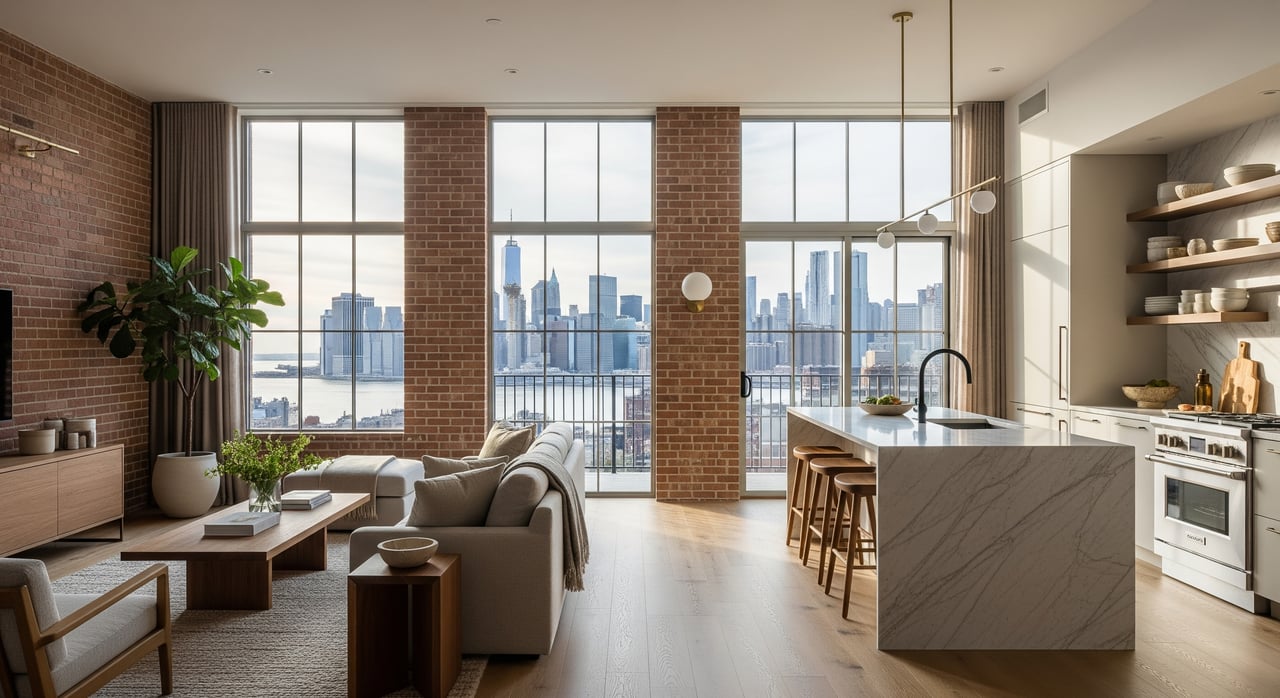
Dreaming of a Williamsburg condo but worried about the down payment and monthly costs? You are not alone. First-time buyers in New York often discover that the condo’s financing rules matter as much as their credit score. In this guide, you will learn the key programs that first-time buyers use, how they affect your payment, and what to watch for in Williamsburg condo buildings. Let’s dive in.
First-time programs at a glance
Buying your first home in NYC often starts with comparing loan types. The most common options include FHA, VA if you are eligible, low-down conventional loans such as HomeReady or Home Possible, and state or city down payment assistance. Each option has different rules for down payment, mortgage insurance, and condo approval.
Your best fit depends on your income, credit, savings, and the condo building’s status. Program terms and limits change, so you will want a lender to confirm current rules for your situation.
FHA loans for condos
FHA loans can help you buy with a 3.5% down payment if your credit score is around 580 or higher. Borrowers with lower scores may need a larger down payment. FHA charges an upfront mortgage insurance premium and an annual premium. For many loans with less than 10% down, the annual premium continues for the life of the loan.
For condos, FHA will require that the building be FHA-approved. Approval depends on factors like owner-occupancy, commercial space, reserves, and litigation. If the project is not approved, FHA is not an option for that building.
VA loans if eligible
If you are a qualified veteran, active-duty service member, or an eligible survivor, a VA loan can offer zero down payment with no private mortgage insurance. A VA funding fee may apply unless you are exempt. Like FHA, VA will require the condo project to be VA-approved.
Low-down conventional options
Fannie Mae’s HomeReady and Freddie Mac’s Home Possible programs allow 3% down for qualified low-to-moderate income buyers. These programs can be flexible on income sources. They come with monthly PMI that you can usually cancel once you reach sufficient equity.
All conventional loans must meet project eligibility standards. Lenders review the building’s financials, reserves, litigation, and policies. Some buyers use a Conventional 97% LTV product with PMI. Compared to FHA, conventional loans often require stronger credit and tighter debt-to-income ratios.
NYC and NY State assistance
New York State’s SONYMA has historically offered low-interest mortgages and down payment assistance for eligible buyers. New York City agencies may also run DPA and homebuyer education programs. Terms and funding vary, and many require pre-purchase counseling.
Some employers, unions, or local nonprofits provide assistance too. Program names, income limits, and purchase price caps change, so verify current details with a local lender or housing counselor.
Your monthly cost, explained
Your monthly housing payment includes more than just the mortgage. In NYC condos, you should budget for:
- Principal and interest on the mortgage
- Mortgage insurance, if required (PMI for conventional or MIP for FHA)
- Condo common charges or HOA fees
- Property taxes and assessments
- Homeowner’s insurance
- Any second-lien payment if you use DPA structured as a loan
Lower down payments reduce your upfront cash but raise your monthly cost through a larger loan amount and insurance. DPA can help with cash at closing. Depending on the structure, it may add a second payment or a lien that becomes due if you sell or refinance.
Illustrative payment examples
These examples are for learning only. They assume a 30-year fixed at 6.5% and use a typical PMI estimate of 0.75% of the loan amount per year when applicable. Your rate, PMI, and terms will vary. Add your condo’s common charges and property taxes on top.
$500,000 condo
- 20% down ($100,000) – loan $400,000 → P&I about $2,528 per month
- 3% down ($15,000) – loan $485,000 → P&I about $3,065 plus PMI about $303 → about $3,368
$800,000 condo
- 20% down ($160,000) – loan $640,000 → P&I about $4,038
- 3% down ($24,000) – loan $776,000 → P&I about $4,896 plus PMI about $485 → about $5,381
$1,200,000 condo
- 20% down ($240,000) – loan $960,000 → P&I about $6,067
- 3% down ($36,000) – loan $1,164,000 → P&I about $7,357 plus PMI about $728 → about $8,085
Condo common charges in Manhattan and Brooklyn can range from several hundred to over a thousand dollars per month depending on amenities. Property taxes vary by unit. Both are included in lender qualifying ratios.
Condo approval and competitiveness
Many lenders require the condo to be warrantable, meaning it meets investor rules. Common issues that can block financing include high investor ownership, a large commercial component, pending litigation, or weak reserves. Some Williamsburg buildings also have sublet policies that will draw extra scrutiny.
Owner-occupancy levels, building financials, and insurance coverage all matter. Expect your lender to request the condo’s resale package, budget, master insurance, and meeting minutes. Getting those documents early helps you avoid delays and protects your contract timeline.
In competitive NYC markets, larger down payments and faster closings can stand out. If you plan to use a low-down program or DPA, you can still win by showing a strong pre-approval, proof of funds for your share of closing costs, and flexibility on timelines while the lender reviews the building.
Eligibility and common hurdles
Many first-time programs define a first-time buyer as someone who has not owned a principal residence in the past three years. Confirm the definition for your loan and any DPA you consider.
Typical credit expectations vary by program. FHA often works at 580+ for 3.5% down. Conventional low-down programs generally prefer higher credit. Debt-to-income caps often land between 43% and 50%, and some loans require cash reserves that cover several months of your payment plus HOA.
Gift funds are common, but sources must be documented. Programs like HomeReady, Home Possible, and many DPAs set income limits and purchase price caps. A frequent hurdle in Williamsburg is that HOA fees and building rules reduce the qualifying loan size or slow the process if the project is not warrantable.
Your next steps
Use this checklist to move forward with clarity and speed:
- Ask your lender for a full written pre-approval, not a pre-qualification. Include the exact program, down payment, and any lender overlays.
- Verify whether the target condo is FHA, VA, or conventional warrantable. Get the lender’s condo document checklist and timeline.
- Compare PMI vs FHA MIP cost and how long each would apply. Confirm required reserves and how HOA fees factor into your approval.
- Explore SONYMA and NYC DPA options and how they are structured, including whether assistance is forgivable or a second lien.
- Confirm accepted down payment sources such as savings, gifts, or employer assistance.
- For eligible veterans, confirm VA condo approval and your Certificate of Eligibility.
As a Brooklyn-based, owner-led brokerage, we help you build a smart offer strategy, coordinate condo documents with your lender, and target buildings that fit both your budget and your timeline. Ready to start a focused condo search in Williamsburg? Connect with Chana Ofek to map your path from pre-approval to keys.
FAQs
What first-time buyer programs apply to Williamsburg condos?
- FHA, VA for eligible borrowers, low-down conventional options like HomeReady or Home Possible, and New York State or NYC down payment assistance programs.
Can I buy a Williamsburg condo with an FHA loan?
- Yes, if you qualify and the specific condo project is FHA-approved; if the project is not approved, you will need a conventional or other eligible loan.
How does PMI compare with FHA MIP for NYC condos?
- Conventional PMI is usually cancelable when you reach enough equity, while FHA MIP includes an upfront and annual premium that may last for the loan’s life if you put less than 10% down.
Do NYC or NY State offer down payment assistance?
- Yes, SONYMA and NYC agencies periodically offer assistance and counseling, but terms, income limits, purchase caps, and funding availability change and must be verified.
What building issues can block condo financing in Williamsburg?
- High investor concentration, large commercial components, pending litigation, weak reserves, or policies that conflict with lender standards can make a project non-warrantable.
How can a low-down buyer stay competitive on a condo?
- Secure a strong pre-approval, document DPA if used, be ready for condo reviews, and show clean funds and flexible timelines to keep the offer attractive.